
Achieve perfection in your home improvement projects by mastering the art of leveling wood door installation. When it comes to creating a seamless transition between rooms, few things are as important as a perfectly hung door. A misaligned door can lead to drafts, damage, and, let’s be honest, frustration. But worry not! With the right guidance, even a beginner can tackle this task confidently. In this blog post, we simplify the steps to ensure your doors open and close effortlessly. Explore the rewarding process of leveling wood door installation and turn what seems like a challenge into a straightforward, satisfying project. Did you know an improperly installed door can decrease energy efficiency? By honing this skill, you improve your living space and contribute to a sustainable environment. Roll up your sleeves and dive into this step-by-step guide for a successful DIY project.
Understanding the Importance of Properly Leveled Doors
A door that sits perfectly level in its frame does more than look good—it functions smoothly every day. A sagging or uneven door can rub against the jamb, creating friction that makes opening and closing difficult. Over time, this friction may cause damage to both the door and frame, leading to costly repairs. Ensuring the door is square and plumb safeguards your investment and avoids unnecessary wear and tear. Focusing on leveling wood door installation also improves energy efficiency. Gaps at the top or bottom of a misaligned door allow drafts, making heating and cooling systems work harder. Additionally, a poorly aligned door can reduce privacy and let in noise. Properly leveled doors enhance both form and function, providing a smooth operation for years.
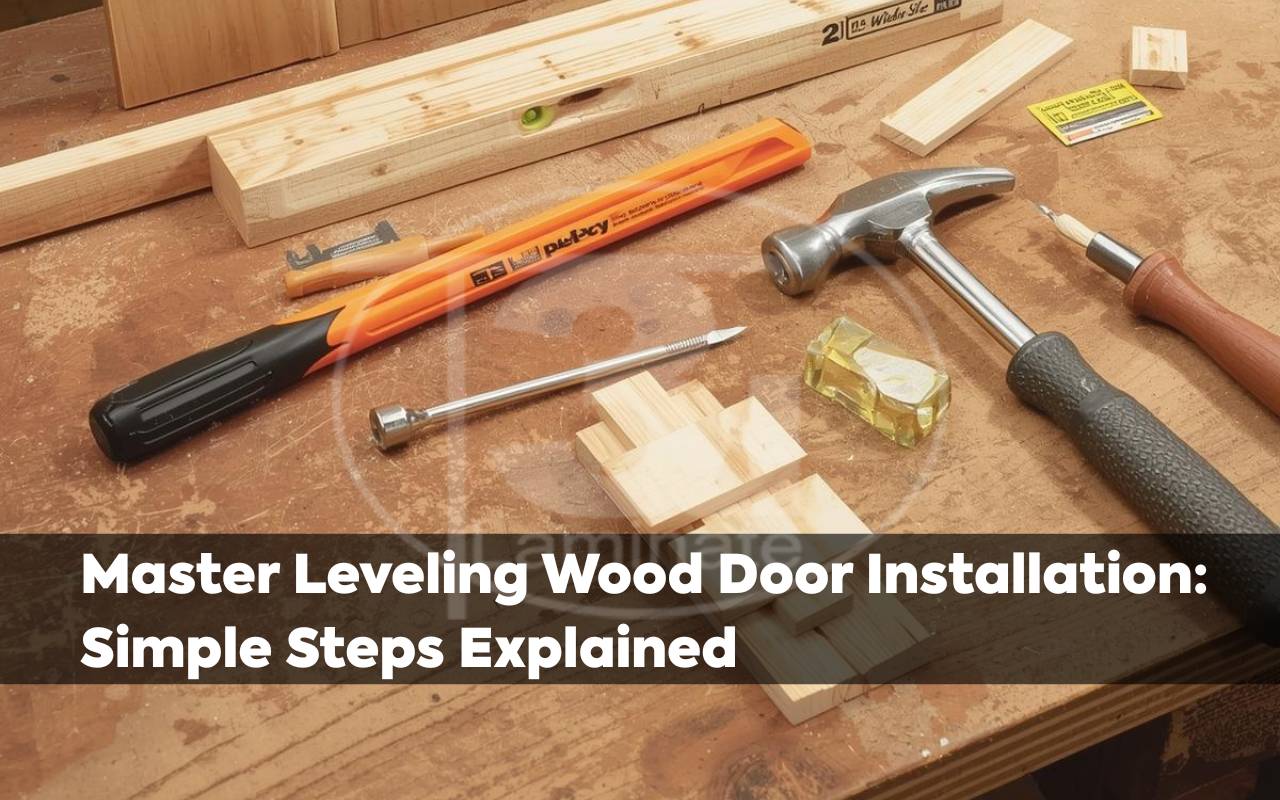
Essential Tools and Materials for Wood Door Installation
- Reliable level to check horizontals and verticals
- Tape measure for accurate dimensions
- Chisels for fine adjustments
- Hammer or mallet, drill with bits, and screwdriver
- Wood shims to fill gaps
- High-quality wood screws for securing hinges
- Door hinges and hardware that match your door type
- Sandpaper or wood file for smoothing rough edges
By preparing this toolkit in advance, your leveling wood door installation will go smoothly. Make sure to check our Custom Doors Texas page for additional door hardware ideas.
Preparing the Door Frame for Installation
Start by inspecting the existing frame for damage or warping. Use a level against the jamb to check plumb and note high or low spots. Correct the frame by trimming warped wood, filling cracks, and sanding uneven areas. A well-prepared frame sets the foundation for solid installation. Clean the frame thoroughly to remove dust and debris, helping shims sit flush and preventing shifting. Check threshold level and adjust as needed with base shims. A clean, square surface ensures your door fits snugly, making leveling wood door installation easier and more precise.
Measuring and Marking for Accuracy
Careful measuring is essential for successful leveling wood door installation. Measure the rough opening’s height and width at several points. Record the smallest dimensions to ensure proper fit. Transfer these measurements to the door, marking hinge mortise locations and door stop outlines. Use a sharp pencil and carpenter’s square for straight lines. Double-check every mark before cutting or chiseling. Even slight errors can result in binding or gaps. Spending extra time now guarantees smooth alignment and a professional-looking finish.
Properly Positioning the Hinges on the Door
Correct hinge placement is crucial for balanced weight distribution and smooth swinging. Mark hinge mortise locations on the door edge using your template or jamb guide. Standard placement is 7 inches from the top to the upper hinge and 11 inches from the bottom to the lower hinge. Chisel shallow mortises so hinges sit flush. Attach hinges using screws and verify plates are level. Precision here prevents binding and ensures accurate leveling wood door installation when securing the door in the frame.
FAQs About Leveling Wood Door Installation
How long does leveling wood door installation usually take?
The process typically takes a few hours depending on door size, experience, and preparation. Planning in advance speeds up installation.
Do I need special tools for this project?
Yes, a reliable level, tape measure, chisels, drill, hammer, and screws are essential for precise leveling wood door installation.
Can beginners handle this installation?
Absolutely. With careful measuring, marking, and following step-by-step instructions, even beginners can achieve professional results.
What happens if the door is not properly leveled?
An unlevel door may bind, draft, reduce privacy, and cause long-term damage to the frame and hardware.
Are there energy efficiency benefits?
Yes. Properly leveled doors reduce drafts, keeping your home warmer in winter and cooler in summer, lowering utility bills.
Installing the Door Knob and Lockset
Installing hardware before hanging the door simplifies the process. Mark knob and latch hole locations using the template. Drill carefully to avoid splintering wood. Fit the latch into its housing and secure with screws. Place the knob or lever assembly on both sides, aligning the spindle and screws. Tighten evenly so hardware sits straight without binding. A properly installed knob and lockset ensures your leveling wood door installation is secure and user-friendly.
Aligning and Securing the Door in the Frame
Position the door in the frame with a helper holding it steady. Slide shims behind the hinge side to keep it plumb. Check vertical alignment with a level, adjusting shims until the edge is perfectly straight. Secure hinges to the frame by driving screws through the hinge leaves into the jamb. Start with middle screws, then add top and bottom ones. Fill remaining gaps with thin shims and trim flush. This careful process locks in your precise leveling wood door installation.
Testing the Door for Smooth Operation
Open and close the door multiple times to check for rubbing or sticking. Adjust problem areas by loosening hinge screws and gently tapping with a rubber mallet. Insert or remove shims under hinges or threshold as needed. Test until the door swings freely and latches easily. Thorough testing ensures reliable performance for your leveling wood door installation every time.
Finishing Touches and Adjustments
- Remove leftover shim pieces and sand rough edges.
- Apply stain or paint touch-ups to blend with the door and frame.
- Seal gaps with flexible foam weatherstripping.
- Install strike plates, adjusting for smooth latching.
- Final visual check to confirm hinges are flush and gaps even.
These final adjustments complete your leveling wood door installation, leaving you with a project you can admire for years. For more guidance, visit our Contact Us page to get expert help.
Enjoying the Fruits of Your Labor
Step back and appreciate a perfectly hung door. Each swing and silent close highlights your careful leveling wood door installation. Your new door enhances your home’s appearance, comfort, and energy efficiency. Celebrate your DIY success and enjoy lasting benefits from your precise work.