
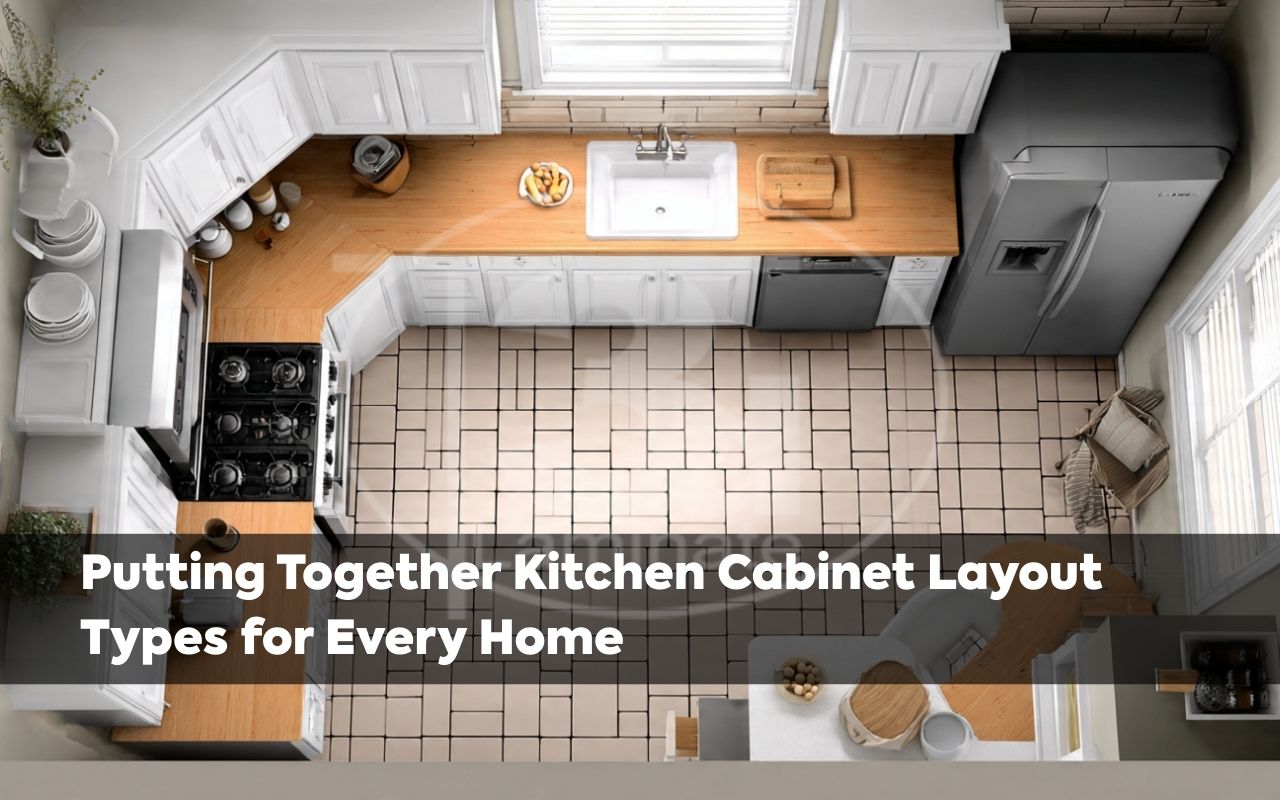
Kitchen Cabinet Layout Types help shape the heart of your home: the kitchen. This space hosts meals, conversations, and daily routines. When cabinets are placed wisely, the room feels calm and easy to use.
If storage feels tight or you bump into corners, layout may be the issue. By choosing cabinet plans that match your habits, you can turn cooking zones, corners, and even a tall pantry into organized, welcoming areas that support every meal.
Understanding the Work Triangle for Efficient Workflow
Balancing the work triangle is a classic way to plan Kitchen Cabinet Layout Types so cooking tasks flow smoothly. The work triangle links sink, stove, and refrigerator in a simple path. When these points are close, yet not crowded, you take fewer steps and feel less tired.
You can also use the work triangle as a guide for cabinet placement. Store dishes and cleaning tools in base units near the sink. Keep pots and pans by the stove. Place spices and mixing bowls in wall cabinets over your main prep area.
To make the work triangle feel natural, consider:
- Keeping paths between sink, stove, and fridge clear and free of obstacles
- Avoiding tall cabinets that block corners or crowd key zones
- Leaving enough counter space beside each station for prep and unloading
Choosing Between Base and Wall Cabinets for Optimal Storage
Balancing base vs wall cabinet choices is vital when you plan Kitchen Cabinet Layout Types for dishes, cookware, and food. Base cabinets sit on the floor and offer deep storage for heavy pots. Wall cabinets free counter space and keep plates or glasses at eye level.
A smart mix of both types can unlock hidden storage. Drawers or pull-outs in base cabinets make heavy items easier to reach. Adjustable wall shelves hold tall glasses and small spice jars. Together, they create a calm balance of open counters and closed storage zones.
When comparing base vs wall cabinets, think about:
- How often you reach for each item during normal cooking
- Which pieces are heavy, fragile, or used by kids
- Where you need clear counter space for prep and serving
If you are remodeling in Cedar Park, explore our
kitchen cabinets in Cedar Park, TX.
You can see how real layouts use base and wall units.
Maximizing Small Corners with Clever Cabinet Solutions
Tight corners can waste space if you leave them empty. Standard L-shaped layouts often create dark, hard-to-reach spots. With a few smart cabinet ideas, you can turn those awkward areas into helpful storage instead of dead zones.
Corner cabinets with rotating shelves or pull-out trays make items easy to grab. You no longer need to crouch or reach into shadows. Fan-shaped corner drawers split the space into shallow sections, so jars, pans, and gadgets stay visible and neat. Adding small lights inside helps you see everything quickly.
Incorporating a Tall Pantry for Additional Storage Space
Adding a tall pantry can transform your kitchen by using vertical space instead of extra floor area. When you include a tall pantry in your Kitchen Cabinet Layout Types, you keep cans, jars, and dry goods together.
Place everyday items on shelves at eye level. Use higher or lower levels for backups and bulk goods. Pull-out pantry units with sliding trays stop food from hiding at the back, so you can check supplies quickly while you cook.
A tall pantry works best when you:
- Group foods by type, such as baking ingredients, snacks, or breakfast items
- Label bins so everyone in the home finds items fast
- Leave space for tall bottles, cereal boxes, and paper goods
If you live near Leander, review our
kitchen cabinets in Leander, TX.
You can gather ideas for tall pantry designs and smart storage.
Selecting Open Shelving for a Modern and Airy Feel
Open shelving adds a modern note to many Kitchen Cabinet Layout Types and keeps daily items within easy reach. You can display favorite dishes, cookbooks, and bowls, which makes the room feel lighter. This style works especially well in small kitchens where large cabinets may feel too heavy.
Because shelves are open, you will likely keep them tidy. Simple floating wood boards, metal brackets, or glass shelves can hold moderate weight and add character. Mix open shelves with closed cabinets so clutter stays hidden while your best pieces stay on show.
Adding Glass Front Cabinets to Showcase Decorative Items
Glass front cabinets let you turn storage into a display. They highlight special dishes, glasses, or heirloom pieces while breaking up rows of solid doors. With small lights inside, colors and textures stand out and give the room a warm glow.
You can choose clear glass to show every detail or frosted glass for a softer look. Adjustable shelves inside hold plates, cups, and vases of different sizes. Keep everyday items in solid cabinets and reserve glass fronts for collections you enjoy seeing.
Customizing Cabinets for Specific Kitchen Needs
Every household cooks in a different way, so custom cabinet details can be very helpful. You might add narrow pull-outs for spices, deep drawers for pots, or vertical slots for baking sheets and cutting boards. These choices shape storage around your routine.
Adjustable shelves and modular inserts also let you change things later. A wine rack today might become a snack shelf tomorrow. Pick materials, finishes, and hardware that match your taste and daily use. This blend of style and function makes cooking feel smoother.
Utilizing Pull-Out Drawers for Easy Access and Organization
Pull-out drawers make deep storage much easier to use. Instead of bending and reaching into the back of a cabinet, you slide the whole drawer forward and see every item at once. This design cuts searching time and reduces strain on your back and knees.
Drawers with dividers keep utensils, lids, and trays in order. Soft-close slides protect the cabinet box and feel pleasant to use. Plan shallow drawers for cutlery and spices, then save deep drawers for pans or small appliances, so each item has a clear home.
Integrating Built-In Appliances for Seamless Design
Built-in appliances can help your kitchen feel calm and unified. Ovens, microwaves, and refrigerators that sit flush with nearby cabinets create a smooth line. Matching cabinet panels on some doors hide visual clutter and let the room’s colors stand out instead.
You can mount a microwave at eye level or tuck a coffee station behind a lift-up door. Just remember to allow space for airflow and future repairs. With good planning, these built-in pieces support your layout quietly instead of demanding attention.
Frequently Asked Questions
How does the kitchen work triangle affect cabinet layout?
The work triangle links sink, stove, and refrigerator so you can move with fewer steps. When cabinets support this path, tools and ingredients stay close to each zone. This simple idea saves time, reduces traffic jams, and keeps cooking tasks comfortable.
How do I decide between base vs wall cabinets?
Think about what you use most. Heavy pots and small appliances usually belong in base cabinets with strong drawers. Everyday plates and glasses often sit best in wall cabinets or open shelves near the dishwasher or sink, so loading and unloading feel easy.
Which cabinet layouts work best in a small kitchen?
Small kitchens benefit from clear paths and vertical storage. Tall pantries, slim pull-outs, and open shelves keep items close without crowding the room. Corner solutions and built-in appliances also free space, so you can move safely even when more than one person is cooking.
Is a tall pantry worth adding to my space?
A tall pantry is helpful when you want to centralize food storage. It holds dry goods, snacks, and extra supplies in one place. Because it uses height instead of width, it often fits into narrow areas that might otherwise stay empty.
How can I start planning a cabinet layout for my home?
Start by listing what you store and how you cook each day. Then look at example layouts on
Total 3D Cabinets.
When you are ready to plan, talk with our
kitchen layout design team about measurements and goals.
Creating Your Dream Kitchen with the Perfect Cabinet Layout
Designing a kitchen that fits your life starts with clear cabinet placement. As you refine the work triangle, you shape how easily you move while cooking. Balancing base and wall units and adding pantries or open shelves keeps each task simple.
By exploring different Kitchen Cabinet Layout Types, you set a strong base for the room. Add details such as pull-out drawers and built-in appliances to create a kitchen that looks beautiful and works hard.