
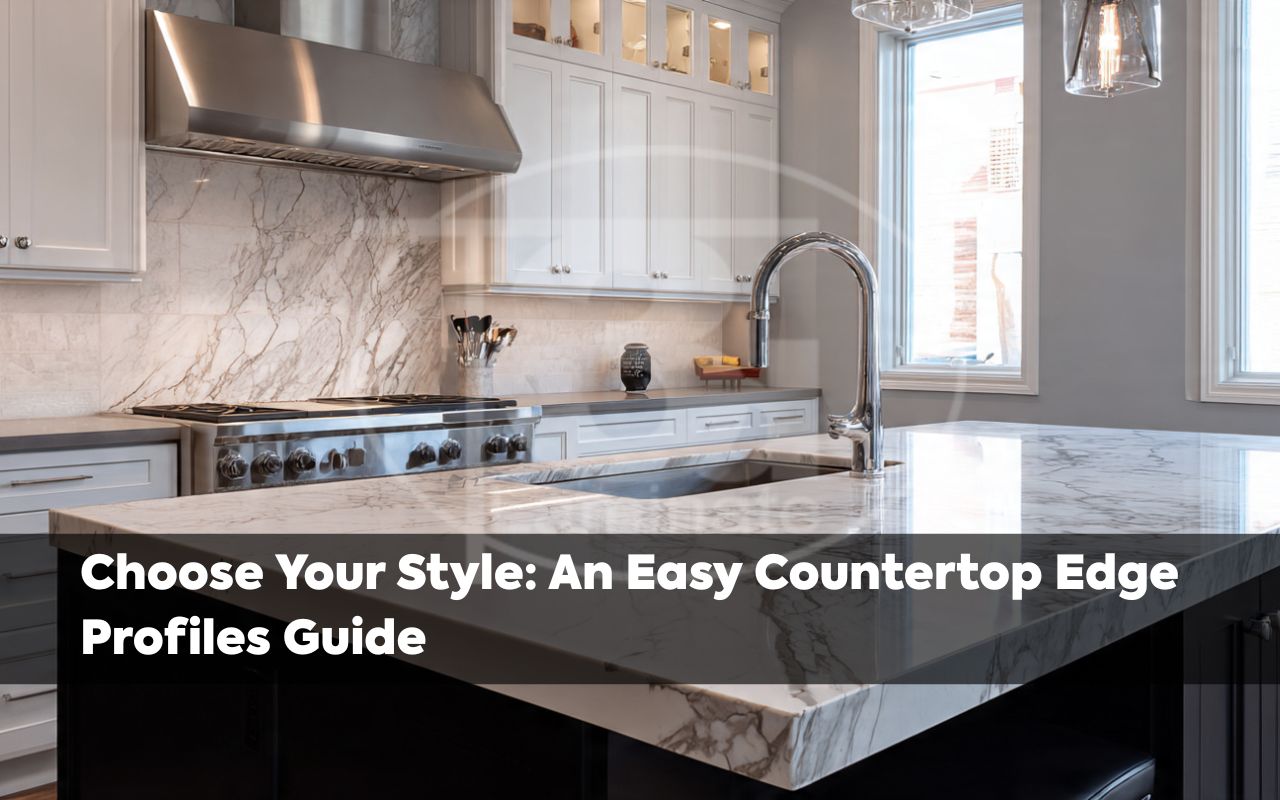
Explore the world of kitchen transformations by considering one detail that often goes unnoticed: the countertop edge profile. This might seem like a minor aspect at first glance, but the right choice can completely change the look and feel of your kitchen.
Whether you’re captivated by sleek modern lines or drawn to classic designs, the edge can show your style. Picture this: you’re in a showroom, surrounded by dazzling countertops, yet you’re unsure which edge to choose. Use this Countertop edge profiles guide to compare shapes and pick the edge that fits your taste.
Understanding Countertop Edge Profiles
Grasping the basics is an essential start to this Countertop edge profiles guide. Edge profiles are the shape and finish on the exposed side of your countertop. Although it seems small, the right profile can connect cabinets, backsplashes, and floors into one look.
Different profiles also affect comfort and cleaning. For example, smoother corners are easier to wipe, and they can hide small chips. Meanwhile, deeper curves may need more care. Still, once you learn the main shapes, choosing becomes much easier.
What an edge profile changes
- Style: it sets the mood, from modern to classic.
- Cleaning: simpler lines usually wipe faster.
- Comfort: rounded corners feel softer to lean on.
- Durability: some shapes hide wear better over time.
Sleek and Modern Edge Profiles
Embracing a sleek edge can update your kitchen with a clean vibe. Eased sits at the heart of modern design. It looks almost flat, yet the corner is slightly softened. As a result, it pairs well with simple cabinets and open shelves.
Bevel offers another modern look. It’s cut at an angle, so it creates a crisp line that catches the light. Additionally, a light Radius curve can reduce wear while keeping the shape tidy. To see how edges work with built-ins, explore countertop and cabinet options in Texas.
Modern-friendly combinations
- Neutral counters + simple edges for a calm look
- Dark slabs + angled cuts for bold contrast
- Minimal hardware + clean lines for a seamless feel
Classic and Timeless Edge Profiles
Choosing a classic edge can add warmth and tradition. Ogee stands out with a graceful S-shaped curve. Therefore, it often pairs well with stone surfaces that already feel rich and detailed. Even so, it can need more careful cleaning than simpler shapes.
If you prefer something quieter, a gentle curve can still feel traditional. In many kitchens, a soft corner keeps the room welcoming, and it also helps hide small marks. In other words, classic edges can be both charming and practical.
Intricate and Detailed Edge Profiles
Adding intricate details can create a true focal point. Profiles with steps, grooves, or layered curves can echo trim details in the room. However, tight lines can trap crumbs, so upkeep matters. Also, some materials chip more easily at thin points.
Even so, if you want a custom look, detailed edges can deliver. Before you commit, talk with a pro about daily cleaning and long-term care. That way, your choice stays beautiful for years.
Where detailed edges work best
- Statement islands that you want to highlight
- Homes with classic trim or decorative finishes
- Thicker slabs that can support deeper shapes
Choosing the Right Edge Profile for Your Kitchen
Selecting the perfect edge means matching lifestyle and design goals. If your kitchen is simple, cleaner shapes keep the look consistent. On the other hand, if your space is traditional, richer curves can feel more at home. In this Countertop edge profiles guide, it helps to start with your cabinet style and cleaning habits.
Next, consider the countertop material. Some surfaces handle crisp lines well, while others look better with softer corners. Finally, think about your budget, since complex cuts often take more labor. When you want tailored help from Total 3D Laminate LLC, reach out through the contact page.
Factors to Consider When Selecting an Edge Profile
Reflecting on daily needs helps you pick a profile that fits. Safety matters, especially with kids. Maintenance matters too, because busy homes need quick wipe-downs. Also, durability can depend on the material and the sharpness of the cut.
A quick decision checklist
- Safety: softer corners reduce bumps.
- Cleaning: fewer grooves mean less scrubbing.
- Material: tougher surfaces handle sharper lines better.
- Budget: simple shapes often cost less to make.
Customizing Your Countertop Edge
Personalizing your edge can make the kitchen feel unique. For instance, you can adjust the depth of an angle or widen a soft curve. You can also add a small detail line that matches other trim in the home.
Material also shapes what’s possible. Some surfaces allow more shaping, while others look best with simpler forms. If you bring a clear sketch, many shops can recreate it. As a result, your edge can feel truly made for your space.
Installing and Maintaining Your Chosen Edge Profile
Hiring a skilled installer is often the safest path for a clean finish. They have the right tools, and they can help protect the edge from stains or wear. If you try DIY, practice first on scrap pieces, so your cuts stay steady.
Maintenance depends on the shape. Smooth edges wipe quickly with mild soap and water. Meanwhile, deeper curves may need a soft brush for small gaps. With steady care, your edge can stay fresh for a long time.
Expert Tips for Enhancing Your Kitchen with Edge Profiles
Lighting can make an edge stand out. For example, under-cabinet lights can show clean lines, while pendant lights can cast shadows that add depth. Also, hardware choice matters, because it reinforces the same style story.
Another helpful move is matching your backsplash vibe to your edge. In addition, countertop thickness changes how bold the profile looks. In short, small choices can make the whole kitchen feel more finished.
Frequently Asked Questions
What is the easiest edge profile to clean?
Smoother profiles tend to clean faster because they have fewer tight lines. As a result, quick wipe-downs are easier.
Which edge profile feels safest for families?
Softer corners usually help reduce bumps. Therefore, rounded shapes are often a safer pick in busy homes.
Do edge profiles change the look of a countertop a lot?
Yes, they can. Even small changes in shape affect shadows and highlights, so the countertop can feel more modern or more classic.
How do I match an edge profile to my cabinets?
Start by matching the “feel.” Clean cabinets often suit simpler edges, while detailed cabinets can pair well with richer curves.
Can I create a custom edge profile?
Often, yes. If you bring a sketch or sample, many fabricators can shape a custom edge that fits your design goals.
Elevate Your Kitchen Design with the Perfect Countertop Edge
Choosing the right edge profile is more than a finishing touch. It shapes the feel of the whole kitchen. Whether you prefer clean, simple lines or a more detailed curve, the best choice balances style, safety, and upkeep.
Use this Countertop edge profiles guide to compare options and decide with confidence. Then, when you’re ready to plan the details with Total 3D Laminate LLC, use the contact page to discuss your project.