
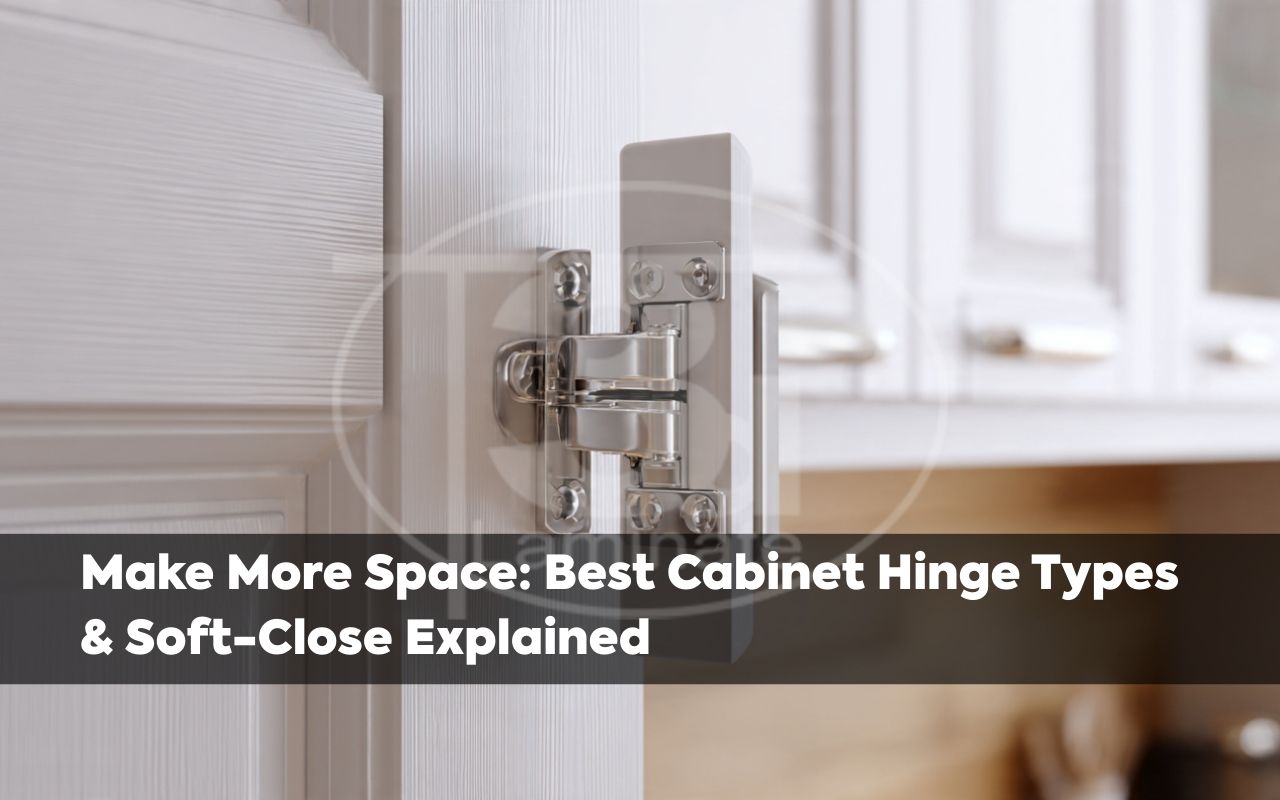
Cabinet Hinge Types & Soft-Close can completely change how your kitchen and bathroom feel. Although they seem small, hinges shape how every cabinet door moves, sounds, and looks in daily life.
Soft-close hinges bring a quiet, smooth motion that feels elegant and calm. As you explore the main styles and features, you will gain confidence to choose the right hinge for every cabinet in your home.
Types of Cabinet Hinges
Common hinge styles you will see
Homeowners often overlook how many cabinet hinge types soft close options exist. Traditional butt hinges feel familiar and simple. European or cup hinges sit inside a drilled hole on the back of the door, giving a clean, modern look.
Pivot hinges mount at the top and bottom of the frame, so the door swings smoothly. Slide-on hinges allow a quick-attach installation, which is helpful during large kitchen or bathroom projects.
- Butt hinges: classic, visible, and very simple to replace.
- European or cup hinges: hidden inside the door for a modern style.
- Pivot hinges: create a smooth swinging motion at the top and bottom.
- Slide-on hinges: make adjustments and replacements faster.
Inset and overlay hinge options
Inset hinges sit so the door rests flush with the frame. This design looks neat and tailored. In contrast, overlay hinges let the door cover part or all of the cabinet face, changing how much of the frame you see.
Overlay styles range from half overlay to full overlay, each giving a different visual effect. Once you know the main Cabinet Hinge Types & Soft-Close choices, you can match them to each room and cabinet layout.
Benefits of Soft-Close Hinges
Comfort, safety, and a quieter home
Soft-close hinges prevent loud slamming, which instantly makes your kitchen feel calmer. They slow the door during the last inch of travel, so it closes gently instead of hitting the frame with force.
- Less noise in busy kitchens and bathrooms.
- Fewer dents, chips, and cracks on cabinet doors.
- Better protection for frames and hardware.
- Improved safety for children’s and pets’ fingers.
Because Cabinet Hinge Types & Soft-Close reduce impact, they extend the life of doors, screws, and joints. Over time, this gentle movement helps your cabinets stay aligned and looking new.
Concealed Hinges: Sleek and Stylish Option
Concealed hinges stay hidden when the cabinet door is closed. As a result, you see a clean, minimalist surface without visible metal parts. This look suits modern and classic kitchens, bathrooms, and built-ins.
Many concealed hinge designs now include soft-close features. This combination delivers a seamless front profile and whisper-quiet motion. When you want a refined finish, a concealed hinge is a simple way to update older cabinets.
Overlay Hinges: Sturdy and Traditional Choice
Overlay hinges are very common in residential cabinets. They allow the door to sit over the frame, covering part or almost all of the face. A half overlay leaves a small gap between doors, while a full overlay hides most of the frame.
Today, many overlay hinges include soft-close mechanisms. They support heavier doors and work well on thicker materials. Moreover, they are often easy to retrofit on existing cabinets, so you can upgrade without replacing every box.
Understanding Opening Angles
Why the angle matters
Cabinet doors swing open to different angles, and that choice affects access and safety. The most common opening angle for soft-close hinges is 110°. This angle gives you enough space to reach the back of shelves without hitting nearby walls or appliances.
Some spaces do better with a slightly smaller 95° angle, which keeps doors closer to the cabinet. Others need wider angles, such as 165° or even 180°, to open fully. The right opening angle keeps walkways clear and prevents annoying collisions.
Importance of Built-in Dampers
Built-in dampers give soft-close hinges their smooth, controlled finish. As the door closes, the damper absorbs energy and slows the motion. This action stops hard slams that can damage the frame and the hinge itself.
High-quality dampers also cut down noise and vibration. They keep the cabinet from shaking each time someone closes a door. Over many years, this protection helps prevent loose screws, warped frames, and cracked wood.
Installation Tips for Soft-Close Hinges
Simple steps for a smooth upgrade
You can install soft-close hinges with basic tools. Use a drill or screwdriver, a measuring tape, a pencil, and a level. First, mark precise positions on the door and the frame so the hinges line up correctly.
- Measure and mark hinge placements carefully.
- Drill pilot holes to avoid splitting the wood.
- Attach hinges loosely, then test the door movement.
- Adjust side-to-side and in-and-out settings as needed.
Tighten screws only after you check how the door moves. Most soft-close hinges allow fine adjustments, so doors close gently without forcing them into place.
Maintenance and Care Tips for Soft-Close Hinges
Soft-close hinges need only light care to stay in good shape. Wipe dust and crumbs away with a dry or slightly damp cloth. If doors start to feel stiff, apply a small amount of silicone spray to the moving parts.
From time to time, check all hinge screws and tighten any that feel loose. Watch for signs of worn dampers, such as sudden slams or uneven closing. Replace faulty hinges quickly to protect your doors and keep movement smooth.
Choosing the Right Soft-Close Hinge for Your Cabinets
When comparing Cabinet Hinge Types & Soft-Close, start with your door thickness, cabinet depth, and overlay style. If you like a hidden look, pick a concealed hinge with an integrated soft-close feature. For a more traditional feel, overlay hinges deliver strong support and gentle motion.
Next, consider opening angle and damper quality. A 110° hinge works for most standard cabinets, yet corner units may need wider movement. When you pair upgraded hinges with new assembled cabinet doors, you refresh both function and style in one project.
Frequently Asked Questions
What is the main difference between regular and soft-close hinges?
Regular hinges let doors close at full speed, which can cause slams and damage. Soft-close hinges use dampers to slow the motion, so doors close quietly and gently without extra effort from you.
Can I add soft-close hinges to my existing cabinets?
Yes, most cabinets can be upgraded. In many cases, you simply swap old hinges for compatible soft-close models. However, you should always match the hinge cup size, overlay style, and opening angle to your existing doors.
Are soft-close hinges worth the investment?
Soft-close hinges protect doors, frames, and hardware from constant impact. They also create a quieter, safer space, especially around children. Over time, these benefits often outweigh the higher upfront cost of the hardware.
How long do soft-close hinges usually last?
With proper installation and light maintenance, quality soft-close hinges can last for many years. Most modern Cabinet Hinge Types & Soft-Close are tested for thousands of open and close cycles, so they perform well under daily use.
Who can help me choose the best hinges for my project?
You can handle basic projects yourself, yet expert guidance is very helpful. For tailored hinge and cabinet advice, you can contact our team and discuss your layout, door style, and budget.
Elevate Your Space with Soft-Close Hinges
Soft-close hinges turn everyday cabinet use into a smooth, quiet experience. By upgrading to quality Cabinet Hinge Types & Soft-Close, you enjoy safer doors, less noise, and a polished look in every room.
Now that you understand concealed hinges, overlays, opening angles, and dampers, choosing the right hardware becomes easier. When you are ready to plan your next project, you can also contact our cabinet experts for personalized hinge recommendations.