
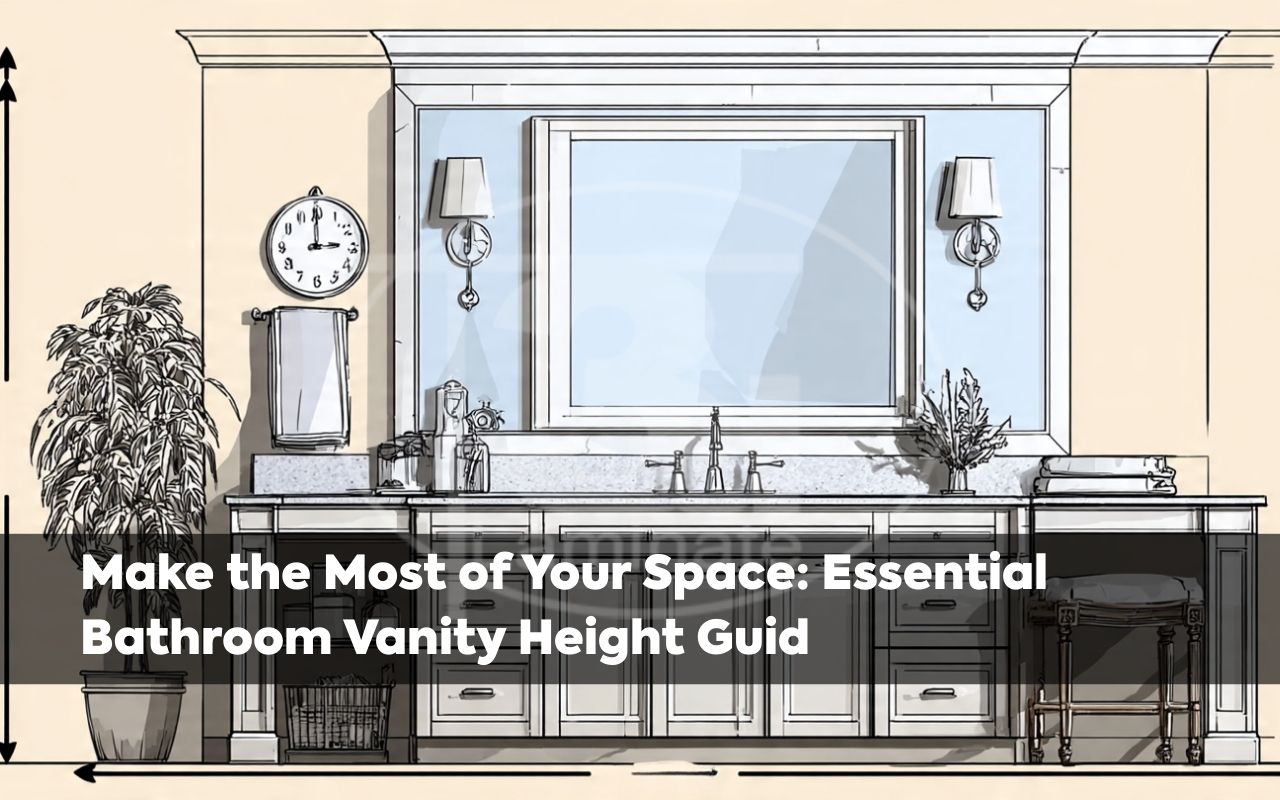
Bathroom Vanity Height Guide helps you turn daily bathroom tasks into comfortable moments instead of awkward stretches over the sink. A slightly incorrect vanity height can make simple routines, like brushing your teeth or washing your face, feel tiring and clumsy.
However, the right height keeps your bathroom balanced between usefulness and style. When you picture your bathroom as a place for calm and practical use, height matters. Therefore, understanding standard vs comfort height, sink types, and even the toe kick helps the room feel right every day.
Standard Bathroom Vanity Height vs. Comfort Height: Understanding the Difference
Standard bathroom vanities usually measure around 32 inches from the floor to the countertop. This traditional height has worked for many people and often suits families with a mix of ages. However, as people have grown taller and daily habits have changed, comfort height vanities have become more common.
Comfort height, sometimes called “American height,” usually places the countertop near 36 inches. This taller option can ease strain on your back and shoulders, which makes regular routines feel more natural. When you compare standard vs comfort height, always consider who uses the bathroom most often and how they move.
- Standard height: about 32 inches, ideal for kids and shorter adults.
- Comfort height: about 36 inches, better for taller adults and modern designs.
- Shared spaces may benefit from a middle ground or mixed heights.
If your home includes taller adults, a comfort height vanity may reduce slouching at the sink. On the other hand, children and shorter adults often feel more at ease with a lower countertop. A Bathroom Vanity Height Guide can help you balance classic standards with modern comfort for every user.
Factors to Consider When Choosing the Ideal Bathroom Vanity Height
Choosing the right vanity height involves more than your height alone. You also need to think about sink types, faucet reach, mirror placement, and storage needs. For example, a vessel sink rests on top of the vanity and adds several inches to the total working height.
Because vessel sinks sit higher, you might prefer a lower cabinet so the setup does not feel too tall. Another important factor is the toe kick area. A deeper toe kick lets you stand closer to the vanity and keeps your posture more relaxed while you shave, wash, or apply makeup.
- Measure your height and shoulder level at the sink.
- Account for sink types, such as vessel, undermount, or drop-in.
- Check faucet height and reach to avoid splashing.
- Review toe kick depth for comfortable standing space.
Additionally, feel how the countertop edge rests under your wrists. Rounded or softened edges are usually kinder during daily use. By considering these small but important details in a complete guide, you create a vanity that supports both physical comfort and visual harmony.
Ergonomics: Importance of Proper Vanity Height for Daily Tasks
Ergonomic design focuses on supporting natural body movement and reducing strain. In the bathroom, everyday tasks such as brushing your teeth, washing your face, or doing skin care involve repeating the same motions many times. With a poorly chosen height, these motions can slowly cause discomfort.
A correctly sized vanity keeps your spine in a neutral line while you lean slightly forward. Good ergonomics also consider different sink types. A sink that sits too low forces you to bend deeply, while one that is too high pushes your shoulders upward. Both situations can create neck and back pain.
Instead, pair the right sink height with a cabinet that suits your body. Then test the setup by mimicking real tasks, like washing or shaving, before you commit. This way, your Bathroom Vanity Height Guide truly supports healthier posture and easier movement throughout your routine.
Impact of Vanity Height on Overall Aesthetic and Design Harmony
Vanity height affects more than comfort; it also shapes your bathroom’s look. A vanity that is too low can make the room feel squat and crowded. In contrast, one that is too tall may overpower the space and pull attention away from other features.
When you plan your layout, think about how the vanity lines up with mirrors, wall lights, and tile patterns. Considering standard vs comfort height helps you maintain consistent proportions. For instance, a higher vanity can match tall cabinets or a large mirror, while a lower vanity may suit a small powder room.
Moreover, balanced heights keep sightlines open and calm. When the vanity fits smoothly with the rest of the room, your bathroom feels more spacious and thoughtfully designed.
Customizing Your Bathroom Vanity Height to Fit Your Specific Needs
Every household has different needs, so a custom vanity height can be very helpful. Before ordering a built-in or prefabricated vanity, measure the average height of the main users. Also, list daily activities that happen at the sink, such as hair styling, shaving, or applying makeup.
A custom vanity can include pull-out drawers, organizers, or shelves at the right level. If you want a vessel or farmhouse sink, remember to subtract that added height from the cabinet size. This step helps you avoid a setup that feels awkwardly tall or short during daily use.
If you live near Cedar Park, explore custom bathroom cabinets in Cedar Park that match your measured height. Likewise, homeowners close to Leander can review bathroom cabinet solutions in Leander for personalized layouts that respect comfort and style.
Additionally, if you are in the Austin area, consider bathroom cabinets designed for Austin homes to align storage, style, and the best countertop height for your family.
Incorporating Storage Solutions While Maintaining Optimal Vanity Height
Useful storage is essential in any bathroom, yet it should not disrupt your chosen vanity height. To keep the countertop at a comfortable level, select drawers and shelves that fit within the main cabinet box. Avoid stacking extra cabinets above the counter just to gain more space.
Instead, use pull-out organizers or sliding trays inside the cabinet to hold toiletries, cleaning products, and towels. These smart solutions increase capacity without changing the outer dimensions. A well-designed toe kick can also hide plumbing, create room for your feet, and even allow discreet features, such as a warming drawer or pull-out bin.
By balancing storage options with ergonomic height, you maintain both comfort and order. The result is a bathroom that feels tidy and easy to use every day.
Achieving Accessibility and Universal Design with the Right Vanity Height
Accessibility planning ensures that people of different ages and abilities can use the bathroom safely. A universal design approach often includes flexible or adjustable heights. For example, wall-mounted vanities can be placed higher or lower, and they can leave open knee space for wheelchair users.
In a shared bathroom, consider installing two vanities at different heights. One can suit taller adults, while the other works better for children or seated users. This simple choice invites everyone to use the room comfortably, without sacrificing style or storage.
- Provide clear knee space for seated access when needed.
- Choose easy-to-reach faucets and shallow sinks.
- Ensure mirrors and lights work for both standing and seated positions.
In private homes, adjustable-height vanities are another growing option. These systems let you raise or lower the countertop as needs change over time, supporting long-term comfort.
Vanity Height for Different Sink Types: Matching Functionality with Style
Choosing vanity height always goes hand in hand with selecting sink types that fit your habits. Drop-in sinks sit inside a cutout in the countertop and add very little extra height, so they often work with standard cabinets around 32 inches.
Likewise, undermount sinks attach beneath the counter and keep the surface smooth and easy to wipe. These sinks pair nicely with comfort height cabinets around 36 inches because the bowl does not sit higher than the top. This mix gives both a sleek look and practical, simple cleaning.
- Drop-in sinks: pair with standard height for familiar feel.
- Undermount sinks: combine well with comfort height and modern styles.
- Vessel sinks: use a lower cabinet, often 28 to 30 inches, to maintain comfort.
Vessel and pedestal sinks rest above the countertop, which adds visible height and a bold style statement. For these options, consider a shorter cabinet so the total working height stays within a comfortable range. A thorough Bathroom Vanity Height Guide will help you match each sink type with the right cabinet height.
Lighting Considerations to Enhance the Visual Appeal at Your Chosen Vanity Height
Lighting has a huge impact on both the look and usefulness of your vanity area. When you choose fixtures, think about how your selected vanity height affects the position of mirrors and lights. For comfort height vanities, wall sconces or vertical LED strips usually work best at eye level, around 60 to 66 inches from the floor.
Above-mirror lighting can also complement a tidy toe kick, since it keeps the floor open and free of clutter. However, make sure overhead fixtures do not cast harsh shadows when you lean toward the sink. A layered lighting plan that mixes soft ambient light with bright task lighting and gentle accents will help your vanity shine.
When your lighting supports grooming tasks while also flattering the room, the entire bathroom feels more inviting and complete.
Frequently Asked Questions
What is the most common bathroom vanity height?
The most common traditional bathroom vanity height is around 32 inches from the floor to the countertop. This standard height has worked well for many homes and is often used in family bathrooms and smaller spaces.
What is the difference between standard and comfort height vanities?
Standard vanities are about 32 inches tall, while comfort height vanities are closer to 36 inches. Comfort height options reduce bending and usually feel better for taller adults, whereas standard height can be easier for children and shorter adults to use.
How do sink types affect the best vanity height?
Different sink types add or reduce height at the counter. Vessel and pedestal sinks sit higher, so they pair well with lower cabinets. Drop-in and undermount sinks add very little height, allowing you to stick with standard or comfort height cabinets comfortably.
Why is the toe kick important for vanity comfort?
The toe kick gives space for your feet under the cabinet front, so you can stand closer to the sink. With the right toe kick depth, your back and shoulders stay more relaxed during tasks like shaving, washing, or doing makeup.
How can I choose the right vanity height for my home?
Start by measuring your height and testing comfortable counter levels. Then think about sink types, storage, and who will use the bathroom most. For tailored help, you can also schedule a bathroom design consultation to review your options with a specialist.
Elevating Your Bathroom Experience Through Optimal Vanity Height
Finding the right balance between standard vs comfort height vanities ensures that your bathroom both looks attractive and works smoothly for everyone. Each part of the design, from sink types to toe kick depth, shapes your daily comfort and the mood of the space.
By thoughtfully planning storage, ergonomics, and accessibility, you create a bathroom that truly supports your routine. When you follow this Bathroom Vanity Height Guide, you can shape a room that delivers long-lasting comfort, beauty, and efficiency for every member of the household.